
If you have ever called a company’s support line or received a call from a sales rep out of nowhere, you have already experienced both sides of telemarketing. But understanding the difference between inbound and outbound telemarketing goes beyond just who picks up the phone first.
Each approach serves a different purpose, requires different skills, and delivers different results. In this guide, we break down exactly how they work, where they differ, and most importantly, which one makes the most sense for your business right now.

Inbound telemarketing is when customers call you. Someone sees your ad, reads your email, or needs help with a product they already bought, and they pick up the phone to reach out. Your job is to be ready, helpful, and knowledgeable when they do.
This type of telemarketing is largely driven by customer intent. The person calling already has a reason to talk to you, which makes the conversation warmer and easier to navigate.
According to HubSpot, inbound leads cost 61% less than outbound leads, largely because the customer is already interested before the conversation even starts.
Outbound telemarketing is when you make the first move. Your team picks up the phone and calls prospects or existing customers to start a conversation, generate interest, or close a deal. Nobody asked for the call, but the goal is to make it worth their time.
This approach is more proactive and requires a different mindset. Your reps are not waiting for interest to come to them, they are creating it. Research from RAIN Group found that 82% of buyers accept meetings with sellers who reach out proactively, which shows that outbound still works when it is done right.
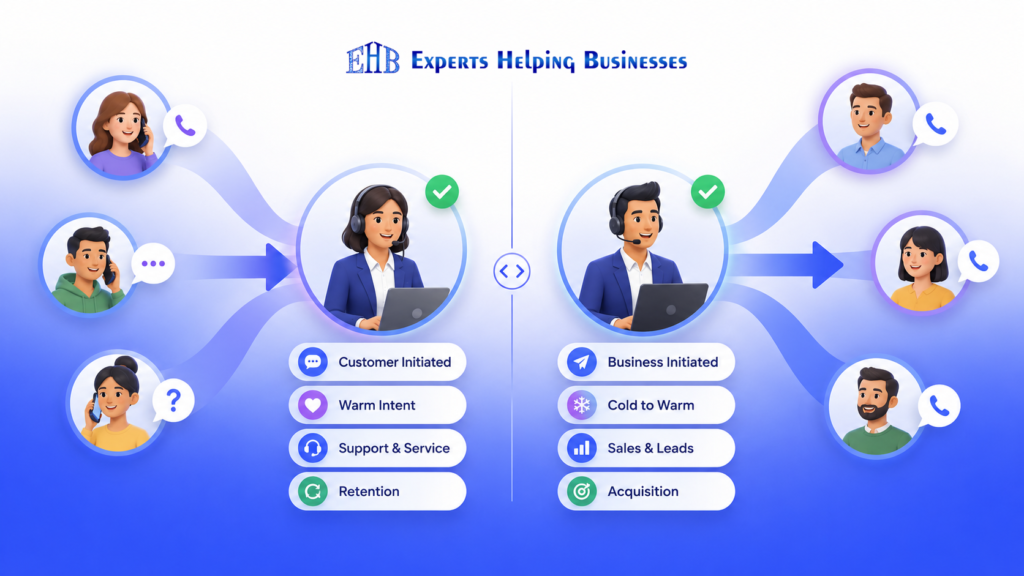
Both approaches use the phone, but they serve very different purposes and attract very different types of conversations. Here is a clear breakdown of how they compare across the areas that matter most.
Factor | Inbound Telemarketing | Outbound Telemarketing |
Who initiates the call | The customer calls the business | The business calls the customer |
Purpose | Customer service, support, and resolving issues | Sales, lead generation, and market research |
Customer mindset | Warm, already interested or needs help | Cold, needs convincing and engagement |
Main objective | Improve satisfaction and retain customers | Acquire new customers and grow revenue |
Agent skills needed | Patience, empathy, product knowledge | Persuasion, resilience, goal orientation |
Common use cases | Support lines, order inquiries, technical help | Cold calling, upselling, appointment setting |
Lead temperature | Warm to hot | Cold to warm |
Conversion effort | Lower, customer already engaged | Higher, agent must build interest from scratch |
With inbound telemarketing the customer always makes the first move. They call because they already have a reason to, whether that is a question, a problem, or genuine interest in what you offer.
With outbound it is the complete opposite. Your team initiates every conversation, which means your reps need to earn attention from the very first sentence. A customer calling your support line is already engaged. A prospect receiving a cold call needs a reason to stay on the line.
Inbound is built around helping people, questions answering service, solving problems, and making sure existing customers feel taken care of. Outbound is built around growth, finding new customers, generating leads, booking meetings, and closing deals.
Think of inbound as your retention engine and outbound as your acquisition engine. Both matter but they serve different stages of the customer journey and should be measured differently as a result.
An inbound caller is already warm. They reached out because they want something from you, which makes the conversation easier and more productive from the start. An outbound prospect is usually cold.
They did not ask to be called and they may not even know your company exists. That means your rep has about ten seconds to say something relevant enough to keep them on the line. According to Gong, the average cold call lasts just under two minutes, so every word counts.
The goal of inbound telemarketing is to make customers happy and keep them around. When someone calls your support line and leaves the conversation feeling heard and helped, they are far more likely to stay loyal and recommend you to others.
The goal of outbound is to bring new revenue in. Whether that means booking a demo, closing a deal, or qualifying a lead for the next step, every outbound call is focused on moving someone further down the funnel. One builds relationships, the other builds pipeline.
A great inbound agent is calm, patient, and deeply knowledgeable about your product. They can handle frustrated customers without getting flustered and they know how to turn a complaint into a positive experience.
A great outbound agent is confident, resilient, and comfortable with rejection. They hear no ten times before breakfast and still dial the next number with the same energy. Hiring the right personality for each role matters more than most businesses realize and it directly impacts performance.
Inbound telemarketing works best for businesses that already have an existing customer base to support or a steady flow of inquiries coming in. Think e-commerce brands handling order questions, SaaS companies running technical support lines, or insurance providers managing policy inquiries.
Outbound works best when you need to actively go after new business. Think B2B companies booking discovery calls, real estate agencies prospecting new leads, or subscription services trying to win back churned customers. The use case you are trying to solve should always guide which approach you invest in.
Inbound leads are warm by nature. They came to you, which means the interest is already there and your job is simply to meet it well. Outbound leads start cold and your team has to do the work of warming them up through research, relevance, and persistence.
Studies show that it takes an average of eight touchpoints to reach a prospect in outbound sales. That is not a reason to avoid outbound, it is just a reminder that patience and consistency are part of the process. Warm leads convert faster but cold leads give you more control over who you target.
Closing an inbound lead generally takes less effort because the prospect already has some level of intent. They raised their hand in some way before picking up the phone. Outbound requires more groundwork.
Your rep needs to establish credibility, create interest, handle objections, and guide the prospect toward a decision all within a single conversation.
That is a bigger ask but it is also why outbound reps tend to develop sharper sales skills over time. The difficulty of the job is what makes the wins feel more earned and the results more scalable.
Here are the key factors that should shape your decision.
If you are an early-stage business trying to build a customer base from scratch, outbound telemarketing gives you the speed and control you need. You cannot afford to sit and wait for people to find you.
On the other hand, if you already have a solid customer base and your main priority is keeping those customers happy and reducing churn, investing in inbound infrastructure makes a lot of sense. Where you are in your growth journey should be the first thing you consider.
Some products naturally generate questions and inquiries. Software platforms, financial products, and healthcare services attract a lot of inbound calls because customers need guidance and support throughout the buying journey. Other products, especially in B2B, need proactive outreach because decision-makers are not going to search for a solution they do not know exists yet.
If your product solves a problem people are actively looking for help with, inbound works well. If you need to create awareness first, outbound is your friend.
Short sales cycles with lower ticket items work well with inbound telemarketing because the customer is close to a decision when they call.
Longer, more complex sales cycles with higher ticket values often require outbound because you need to initiate the relationship, nurture the prospect, and guide them through multiple touchpoints before they are ready to buy.
A company selling enterprise software, for example, will almost always need a strong outbound motion to get in front of the right decision-makers early enough in the process.
Be honest about what your team is actually good at and what they have bandwidth for. Running a strong inbound operation requires solid systems, well-trained support agents, and the ability to handle unpredictable call volumes.
Running a strong outbound operation requires disciplined prospecting, resilient reps, and a consistent process for follow-up. If your team is small and scrappy, starting with focused outbound efforts on a targeted list is often more manageable than trying to build out a full inbound support system from day one.
Inbound telemarketing typically requires investment in infrastructure like call routing systems, CRM tools, and staffing for coverage during business hours. Outbound requires investment in good data, dialing technology, and sales training.
Neither is cheap when done properly, but outbound can generate returns faster because you are actively creating conversations rather than waiting for them. If budget is tight and you need results quickly, a focused outbound campaign targeting the right audience can deliver a pipeline faster than most inbound strategies.
The most successful businesses use both. They run outbound to bring new customers in and inbound to take care of them once they arrive.
According to Salesforce, companies that align their inbound and outbound efforts see up to 36% higher customer retention rates. If you have the resources to do both well, do both. If you have to start with one, let your current business goals decide which one comes first.
Absolutely, and most successful businesses do. Outbound helps you bring new customers in while inbound takes care of the ones you already have. Using both together creates a more complete sales and support operation that drives both growth and retention.
Absolutely. 69% of buyers are open to outbound calls and 82% say they would meet with a rep who reaches out with real value. 57% of C-suite executives still prefer the phone over any other channel. The global outbound telemarketing market is also on track to grow from $10.54 billion to $14.14 billion by 2033.
Businesses that already have an established customer base or generate consistent inquiries through marketing tend to benefit most. E-commerce brands, SaaS companies, insurance providers, and healthcare services are great examples because their customers naturally have questions and need ongoing support.
More than most people expect. Research shows it takes an average of eight touchpoints to reach and convert a prospect through outbound. Most reps give up after two or three calls, which is exactly why persistence is one of the most valuable qualities in an outbound team.
Calling the wrong people with the wrong message. Using a generic script on a low-quality list is the fastest way to waste your team’s time and damage your brand. The businesses that get outbound right invest in good data, personalize their approach, and train their reps to lead with value rather than a sales pitch.
For inbound, track metrics like first call resolution rate, average handle time, and customer satisfaction scores. For outbound, focus on connect rates, calls to meetings booked, and conversion rates through the funnel.