
Struggling with outbound numbers can feel like running in place. You and your team are putting in the hours, dialing and following up with real grit, and yet the connect rates stay stubbornly low.
It’s draining when that hard work doesn’t translate into a full calendar, leaving your momentum feeling hit-or-miss.
Here’s the truth: learning how to increase outbound sales calls isn’t about grinding your reps down, but refining your system. Minor operational shifts can boost connects by 20–30%, spark better conversations, and drive more meetings without the burnout.
This guide explores 12 actionable, data-backed strategies that high-growth teams use to win.
Let’s dive in.

An outbound sale is different from an inbound sale where a prospect calls you directly. Outbound sale happens when your team takes the first step itself and initiates contact with a potential customer.
This means making cold calls, follow-up calls, or prospecting calls to people who haven’t yet expressed direct interest. For example, your sales rep calls a logistics company to introduce a cost-saving solution. That company did not fill out a form or request a demo. You reached them first. That’s outbound.
Outbound selling gives you control over pipeline growth. Instead of relying only on marketing leads, you actively create conversations. When done right, these outbound calls transform from a “numbers game” into a reliable, predictable engine for your company’s growth.
Here are some ways to increase your outbound sales calls:
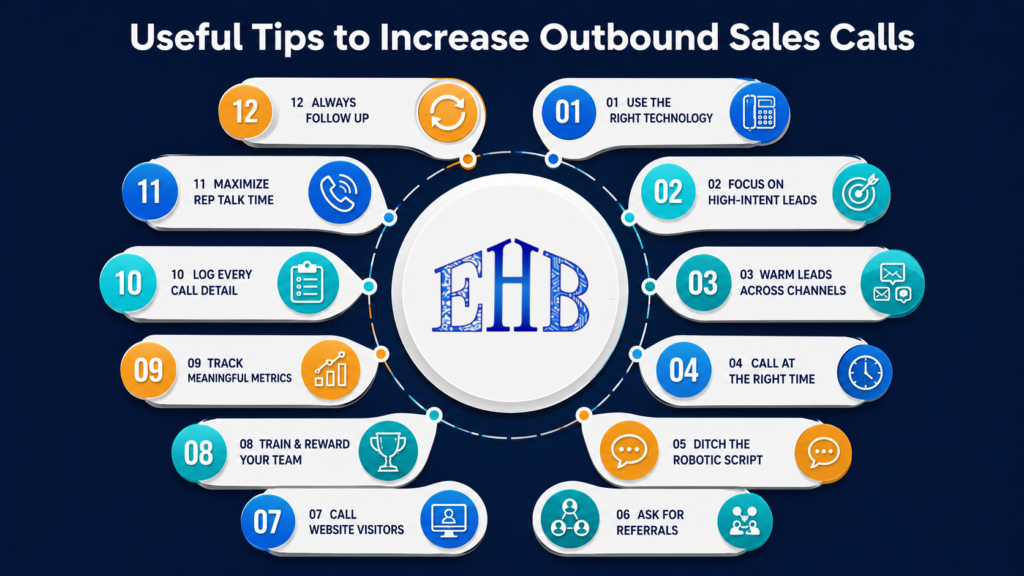
Honestly, if your reps are still manually dialing numbers and logging calls one by one, you are leaving a lot of time and money on the table. Tools like Pipedrive, Readymode, and Voiso take care of the repetitive stuff so your team can talk to people.
With power dialers and click-to-call, a rep who makes 40 calls a day can realistically hit 80 without burning out. That kind of volume adds up faster than you think
Not all leads deserve the same energy. Here is what to look for before picking up the phone:
These people are already thinking about the problem you solve. Calling them the same day they engaged turns a cold call into a timely follow-up. That one shift alone can seriously move your connection rates.
Do you like getting calls from strangers? We don’t. Nobody likes getting a call from someone they have never heard of. So before you dial, send a short LinkedIn message or a quick email the day before.
Something as simple as “Hey, I sent you a note yesterday about cutting logistics costs” completely changes how the call lands. You go from being a random number to someone they vaguely recognize, and that makes a bigger difference than most people expect.
Timing and appearance matter more than most reps realize. A few things that actually work:
A prospect in Austin is way more likely to pick up a 512 number than some random 800 number. Small tweak, real results.
The best reps use scripts as a loose guide and lead with something specific within the first ten seconds. Scripts are fine but reading one word for word will kill a call fast.
Instead of “I am calling to introduce our software,” try something like “I work with logistics companies losing time on manual dispatch, is that something your team deals with?”
That kind of opener makes you sound like a human, not a sales robot, and it keeps people on the line long enough to have a real conversation.
Reach out to clients who love what you do and simply ask if they know anyone dealing with the same challenges they had before working with you.
When you call that referral and say “your colleague Sarah suggested I reach out,” the whole dynamic changes. The trust is already there. You skip the awkward cold opener and get straight to the good part.
Use IP tracking tools to see which companies are browsing your site and then call them while the interest is still fresh. This one is underused and honestly a bit of a cheat code.
If someone from a manufacturing company spent time on your ROI calculator this morning, call them this afternoon. You already know what is on their mind. Open with that context and the conversation gets relevant fast.
Focus on the metrics that tell the real story like calls to conversations, conversations to meetings, and meetings to closed deals.
If your reps are making 100 calls and only booking two meetings, something is off with either the list or the script. The numbers will always point you in the right direction if you are actually paying attention to them.
Every call teaches you something useful. When a rep notes that a prospect is evaluating options in Q2 or that Thursday mornings are the best time to reach them, that detail makes the next call feel personal instead of generic. Build the habit of logging specifics after every single call. Your future self and your whole team will thank you for it.
At the end of the day outbound is a numbers game. The more quality conversations your team has, the more deals they are going to close, it really is that simple.
Use voicemail drop so reps can leave a pre-recorded message and immediately move to the next call. Cut every administrative task that keeps them off the phone. More at-bats means more wins, and your job is to make sure nothing gets in the way of that.
Here’s how outbound can really make a difference for your business:
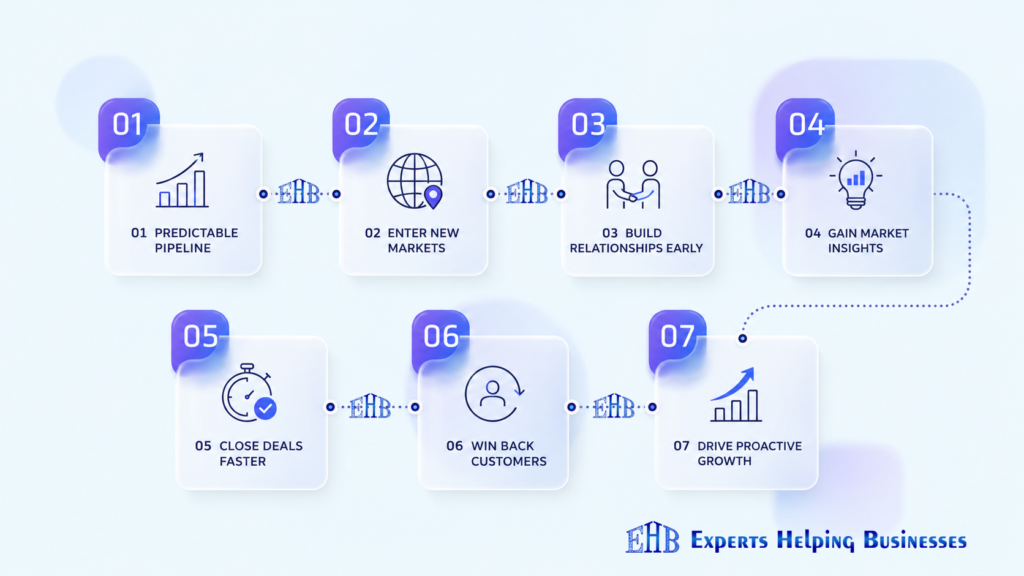
With outbound sales calls, you know where your next opportunity is coming from. When we consistently reach out to the right people, we stop leaving revenue to chance. You control the volume, the timing, and the targeting. That turns into a pipeline you can forecast instead of just hope for.
Outbound helps you enter new markets without waiting for a new audience to find you. You go directly to the people you want to work with. You test a new industry, learn what they actually care about, and figure out if it’s worth pursuing, all without spending months building campaigns that may or may not work.
By reaching out first, you cut your competitors who are waiting for leads to come in. When you pick up the phone first, you get to introduce yourself, build rapport, and become familiar before anyone else does. By the time a prospect is ready to buy, you’re not a stranger but someone they’ve spoken to and trust.
When you call your prospect, you learn what they are looking for. The objections they raise, the problems they’re trying to solve, the language they use to describe their pain. All this is real, unfiltered market research. We don’t have to guess what messaging will land or what product gaps exist. Our prospects are telling us directly, every single day.
When you call someone directly, you can answer their questions on the spot, address concerns before they become deal-breakers, and guide them to a decision without the back and forth that drags things out. A conversation moves faster than an email chain and shorter cycles mean more closed deals in less time, which adds up quickly.
Budgets change, circumstances shift, and sometimes people who left just need to hear from you again. A thoughtful outbound call to a past customer shows that you remember them and still value their business. That kind of personal touch can reopen conversations that bring real revenue back in.
Outbound sales help you move on your terms. And this could help you leave your competitors behind who are sitting around and waiting for their customers to call. Businesses that only respond to inbound are always playing catch-up.
You’re not waiting to see what the month brings but are actively creating the opportunities that fill it. When you commit to outbound, you stop hoping for growth and start driving it. That shift in mindset alone can change the trajectory of your entire sales operation.
Refining the engine your reps use helps scale your outbound sales. True growth happens when you automate the friction, target with precision, and lead every conversation with genuine value.
By layering multi-channel touchpoints with data-backed timing, you transform outbound from a game of chance into a scalable, predictable system. The strategies discussed above help you with it.
To increase connections, warm up your leads with a LinkedIn message or email 24 hours before dialing. This shifts the interaction from a “cold” call to a recognized follow-up. Pair this with local presence dialing to appear as a familiar area code, which can increase answer rates by nearly 400%.
The most effective tools are Parallel Dialers, which call multiple lines at once and only connect reps to live answers, and Power Dialers, which automate the list sequence to eliminate manual dialing. Both should be integrated with a CRM like HubSpot or Salesforce to automate note-taking and lead management.
Call during the “Golden Hours”: 10:00 AM – 11:00 AM and 4:00 PM – 5:00 PM on Tuesdays, Wednesdays, and Thursdays. Using a local area code rather than an 800-number is the single fastest way to reduce the number of ignored calls.
Switch to a Parallel Dialer. This technology dials several numbers simultaneously and filters out busy signals, voicemails, and ringing tones. It ensures your reps spend their time talking to human beings rather than waiting for someone to pick up, often tripling total talk time.
Use a “referral” tone and provide a specific reason for your call. Instead of asking for a person’s title, say: “I’m following up on a LinkedIn message I sent [Name] yesterday.” This positions the call as an expected follow-up rather than a cold solicitation.
Lead with a “Hook” within the first 10 seconds. Identify a specific trigger or a success story from a competitor: “I noticed [Signal], and we helped [Competitor] fix [Pain Point]. Do you have 2 minutes?” Focus on the value you provide, not the product you sell.
Implement Number Reputation Management to monitor your caller ID health across different carriers. To avoid being flagged, rotate your outbound numbers frequently and stop using any number that shows a “Spam Risk” label until it has been “rested” or remediated.