
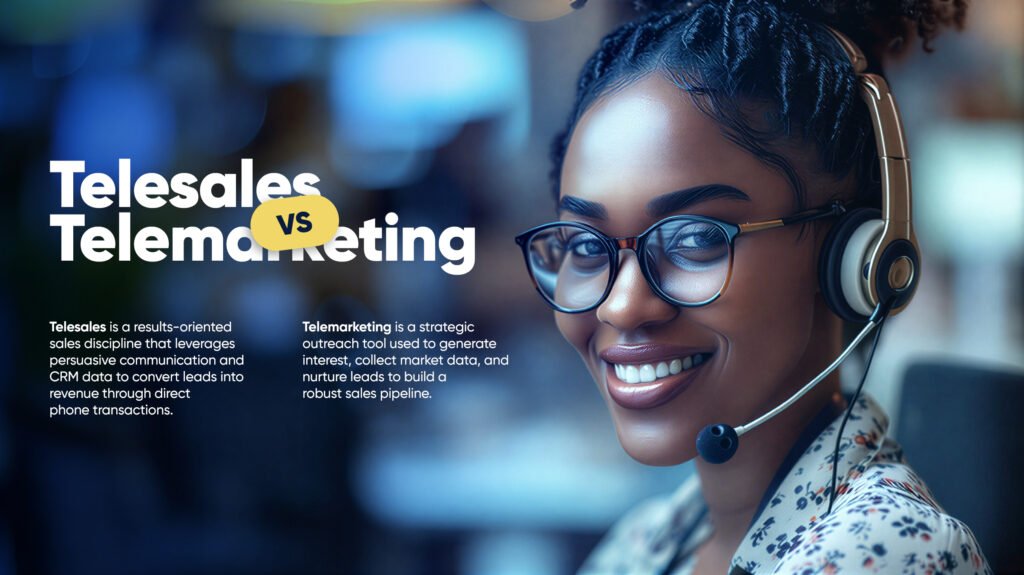
Do you know that telesales and telemarketing are NOT the same? While the terms are often confused, telemarketing and telesales are different stages of the same process.
Telemarketing is the “opener.” It focuses on creating interest, researching the market, and identifying potential leads. Its goal is to build awareness and prepare the ground for a future sale. Telesales is the “closer.” It is the direct process of selling products or services over the phone. Its goal is to convert interest into a transaction and hit revenue targets.
Want to learn more about how they differ? In this guide, we break it all down in simple terms. No jargon. No fluff. Just clear answers that help you grow lead generation, customer acquisition, and sales conversion.
What is Telesales?
Telesales is direct selling over the phone. The goal is simple. Make a sale. A telesales representative speaks to potential customers, explains a product or service, handles objections, and aims for immediate transactional closure.
This is where outbound calls, inbound calls, closing techniques, and sales scripts come together.
Telesales is often used in B2B and B2C sales. It supports inside sales teams and works closely with CRM (customer relationship management) systems like Salesforce, HubSpot, and Zoho CRM. Every call has a clear outcome tied to sales quota attainment and conversion rate.
Types of Telesales
There are two main types of telesales.
Inbound telesales handles inbound calls from people who already showed interest. They may have filled a form, responded to a marketing campaign, or clicked an ad. The focus is inbound lead conversion and customer engagement.
Outbound telesales focuses on telesales outbound calls to a targeted list. This includes cold calling, follow up calls, appointment setting, up selling, and cross selling. Outbound list penetration and qualified lead pipeline matter here.
Some businesses also use hybrid models that combine inbound calling and outbound calling to improve customer lifetime value.
What does Telesales do for Your Business?
Telesales drive direct sales and fast revenue. It helps with customer acquisition, sales funnel movement, and immediate sales impact. It works well for high intent leads, limited time offers, and instant purchase incentive campaigns.
Businesses use telesales to shorten the sales cycle, increase ROI return on investment, and push qualified leads toward closing deals. It is highly measurable using KPIs key performance indicators like conversion rate, sales calls per day, and revenue per call.
What is Telemarketing?
Telemarketing is phone based marketing. The goal is not always to sell right away. It focuses on awareness, education, and relationship building. Telemarketing supports marketing strategies by reaching a broader audience and creating demand over time.
Telemarketing includes telemarketing marketing calls, market research, lead nurturing, and brand awareness generation. It often feeds qualified leads into telesales or field sales teams.
Types of Telemarketing
Telemarketing comes in several forms.
Outbound telemarketing reaches potential customers through outbound calls. It is used for telemarketing lead generation, product promotion, service promotion, and appointment setting.
Inbound telemarketing handles inbound calls from ads, websites, or campaigns. These calls focus on customer service, basic qualification, and information sharing.
There is also telemarketing market research. This gathers market research intelligence, customer feedback, and campaign performance metrics. Creative insight. Many companies discover new product ideas through telemarketing surveys before launching anything.
What does Telemarketing do for Your Business?
Telemarketing acts as a direct bridge between your business and potential customers by using personal conversation to generate leads, close sales, and gather immediate feedback. Unlike passive advertising, it allows you to proactively reach out to a targeted audience to explain your value.
It answers specific questions in real-time, and builds a human connection that digital ads often lack. It also helps you identify who is actually interested in your product, saving you time by turning cold prospects into warm opportunities.
Telesales vs Telemarketing – What is the Difference between Telesales and Telemarketing?
At a glance, telesales and telemarketing both involve outbound calls and inbound calls through call centers. But their purpose, skills, and results are very different. One is built to close sales. The other is designed to open doors.
Understanding this telemarketing telesales comparison helps businesses align sales techniques, marketing strategies, and return on investment ROI.
Before we break each point down, here is a brief comparison to set the context.
| Area | Telesales | Telemarketing |
| Primary goal | Immediate sales and closing deals | Lead generation and brand awareness |
| Core focus | Direct sales emphasis | Marketing and relationship building |
| Sales cycle | Short sales cycle | Extended engagement process |
| Call type | Telesales outbound calls and inbound calls | Telemarketing marketing calls |
| Outcome | Sales conversion and revenue | Qualified leads and market interest |
| Skills used | Closing techniques and persuasion techniques | Communication skills and education |
| CRM usage | Sales process and conversion tracking | Lead nurturing and campaign tracking |
| Example | Selling a plan on the call | Booking an appointment or survey |
Goal and Intent: Closing Sales vs Building Interest
The core difference between telesales and telemarketing starts with intent. Telesales exists to sell. Every telesales sales call is designed to move the prospect toward immediate transactional closure.
This includes up selling, cross selling, product demonstrations, and closing sales during the same interaction. The telesales definition is rooted in direct sales and fast results.
Telemarketing has a different mission. The telemarketing definition focuses on educating potential customers, building brand awareness, and starting conversations. Telemarketers aim to spark interest, not force a sale. This supports customer engagement and long term relationship nurturing.
Example: A telesales representative offers a discount and asks for payment confirmation. A telemarketer introduces a service and checks interest for follow up calls.
Sales Cycle and Engagement Length
Telesales works best with a short sales cycle. The prospect already has intent or urgency. This allows telesales focused selling and faster sales quota attainment. Many telesales campaigns rely on instant purchase incentive offers and targeted sales opportunities to boost telesales conversion rates.
Telemarketing supports an extended engagement process. It nurtures leads over time using follow up calls, educational messaging, and appointment setting.
This approach increases customer lifetime value and supports complex B2B business to business sales cycles where trust and information matter more than speed.
Example: Telesales closing a subscription within one call and telemarketing nurtures a lead for weeks before passing it to inside sales.
Call Type and Target Audience
Telesales targets highly specific prospects. These may be telesales qualified leads from CRM systems, inbound lead conversion campaigns, or past customers. Outbound list penetration is focused and intentional. Every call aims at sales conversion.
Telemarketing targets a broader audience. It includes cold calling, inbound calling, and outbound calling for telemarketing lead generation.
Telemarketers often speak to people who are unaware of the brand. This supports market research, product promotion, and service promotion while identifying telemarketing potential customers.
Example: Telesales calling decision makers ready to buy. Telemarketing calling a new market segment to test interest.
Skills and Communication Style
Telesales requires strong persuasion techniques, objection handling, and closing techniques. A telesales representative must confidently explain product benefits, manage resistance, and guide prospects toward closing ratio improvement.
Sales scripts, call recording, and CRM discipline play a major role in success. Telemarketing requires a softer communication strategy. Telemarketers rely on listening, empathy, and education.
The goal is to build relationships, gather insights, and support lead nurturing rather than push sales. Communication skills matter more than pressure.
Example: Telesales pushes urgency to close sales. Telemarketing asks questions to understand customer needs.
CRM Usage and Performance Tracking
Both telesales and telemarketing rely heavily on CRM customer relationship management systems such as Salesforce, HubSpot, and Zoho CRM, but they use them differently.
Telesales tracks conversion rate, telesales sales calls, revenue, and ROI return on investment. Call tracking focuses on individual call outcome and sales funnel movement.
Telemarketing tracks lead qualification, campaign performance metrics, and customer engagement. CRM data supports marketing automation, market research intelligence, and long term brand awareness generation.
Example: Telesales measures deals closed per day while telemarketing measures leads nurtured per campaign.
Revenue Impact and ROI
Telesales delivers direct revenue. The impact is immediate and measurable. It improves sales conversion, supports business development, and drives fast ROI. This is why telesales is often tied directly to sales quotas and commission structures.
Telemarketing delivers indirect revenue. It improves customer acquisition and strengthens the sales pipeline over time. While the ROI may take longer, it often results in better lead quality and higher customer retention.
Example: Telesales closes a deal today. Telemarketing feeds leads that close next quarter.
Reactive Versus Proactive Approach
Telesales thrives on immediate intent. It is designed to capture lightning in a bottle before it grounds. When a lead downloads a pricing guide or requests a demo, telesales reacts instantly. The goal is to minimize Lead Response Time (LRT), as the probability of closing drops significantly after the first hour.
Instead of waiting for interest, telemarketing proactively introduces a brand to a cold audience. They are “warming the soil” so that when a sales rep eventually calls, the prospect doesn’t ask, “Who are you?” It reaches out to educate, research, and position the brand strategically. This proactive outreach supports market positioning and awareness.
Example: Telesales responds quickly to a hot lead. Telemarketing proactively introduces a new service to the market.
Telesales or Telemarketing – Which One Do You Need for Your Business?

The strongest sales strategies combine both. Telemarketing handles lead generation, market research, and lead nurturing. Once interest is clear, telesales steps in to close sales and drive revenue.
Together, they improve customer acquisition, conversion rate, and overall ROI. Telemarketing warms the audience. Telesales finishes the job. This balance creates a scalable, efficient sales process that supports long term growth and immediate results.
Benefits of Offshoring Telemarketing and Telesales
Offshoring improves lead generation, customer acquisition, and sales conversion while controlling cost. It supports B2B business to business and B2C business to consumer models.
Benefits include scalable call center operations, better CRM hygiene, consistent follow up calls, and improved customer lifetime value. Businesses also gain better market research insights and higher return on investment ROI through specialized teams.
Telesales and telemarketing are not competitors. They are partners. One closes. The other prepares the ground. When used together, they create a strong sales process that moves prospects from awareness to action.
Understanding the difference helps you invest wisely, train better teams, and improve results. Whether you want fast sales or long term growth, the right calling strategy makes all the difference.
Frequently Asked Questions (FAQs)
How are telemarketing and telesales different from each other?
Telesales focuses on direct sales and closing deals. Telemarketing focuses on awareness, education, and lead nurturing before sales.
What are the key benefits of outsourcing telesales and telemarketing?
Outsourcing improves ROI, reduces cost, scales faster, and provides trained sales and marketing specialists with strong CRM discipline.
How do I choose the right BPO provider?
Look for experience, clear KPIs, CRM expertise, call recording transparency, and strong communication skills.
Can offshoring improve my sales performance?
Offshoring increases call volume, improves lead qualification, supports customer engagement, and boosts conversion rate through focused sales and marketing teams.